Cybersecurity careers without coding

Cybersecurity Careers Without Coding: Technical vs Non-Technical Roles and Which Path Perfectly Fits You

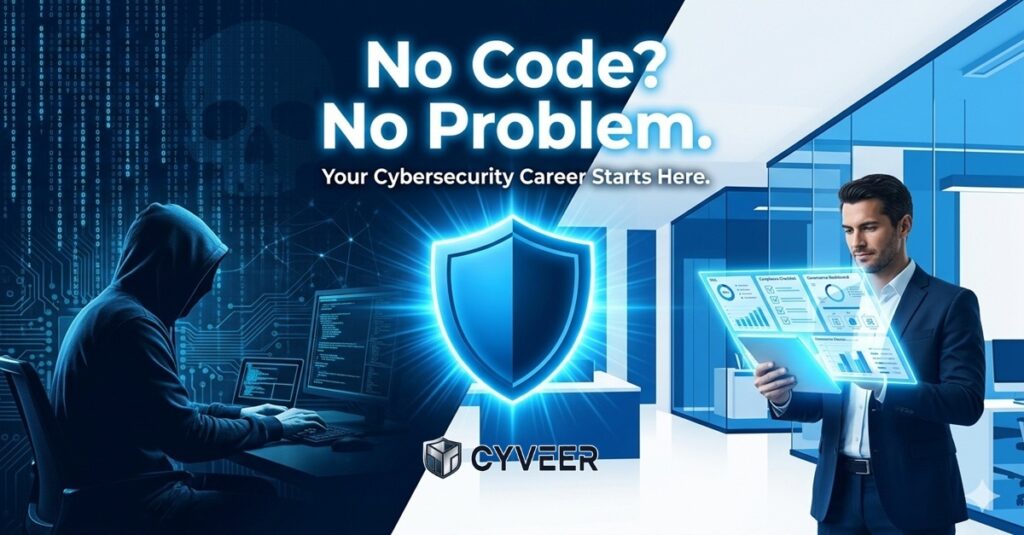
Most people hear “cybersecurity” and immediately picture someone writing complex code or hacking into systems. That image alone has kept thousands of talented professionals from ever seriously considering this field. The reality is far more welcoming. Cybersecurity careers without coding are not only real, they are in high demand, well-compensated, and growing faster than most industries can fill them.

If you have been sitting on the sidelines believing cybersecurity is not for you because you cannot write a Python script, this article will change that thinking. What follows is a practical, honest breakdown of both technical and non-technical tracks, the roles within each, who they suit, and how to find your entry point. By the time you reach the end, you will know exactly where you fit in this industry.

Why Cybersecurity Is Not Just a Technical Field

Cybersecurity is an ecosystem, not a single job. Organizations need professionals who can monitor networks, but they equally need people who understand risk, interpret regulations, communicate policy, manage vendors, and align security strategy with business goals.

4M+

According to the ISC2 Cybersecurity Workforce Study, the global cybersecurity skills gap currently sits at approximately four million unfilled positions. A large portion of those open roles fall within governance, risk, and compliance, not technical engineering.

Organizations are actively recruiting professionals from legal, audit, finance, and business backgrounds into non-technical roles in cybersecurity. This split between technical and non-technical work represents two equally valid and rewarding cybersecurity career paths. Understanding both is the first step toward choosing the right one.

Technical Cybersecurity Roles: Who They Are For

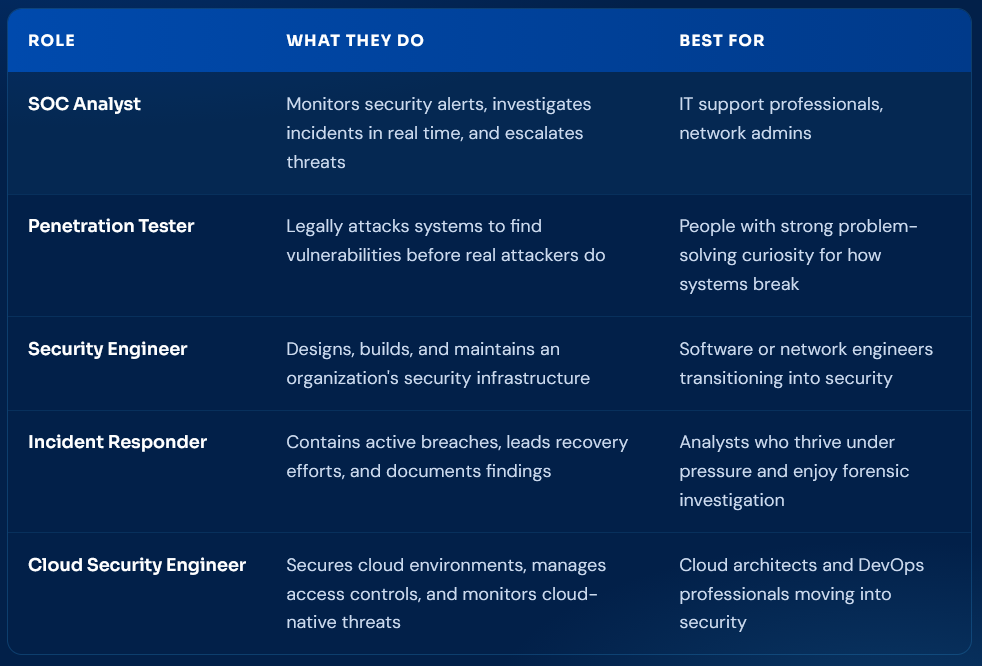
Technical roles involve hands-on interaction with systems, networks, tools, and code. They suit people who enjoy solving system-level problems, analyzing data streams, and working directly with security infrastructure.

Technical Job Roles in Cybersecurity

Key skills required: Networking fundamentals, operating systems, scripting (Python or Bash), SIEM platforms, and threat analysis.

Recommended certifications: CompTIA Security+, CEH, OSCP, AWS Security Specialty

Technical roles offer strong salaries and clear progression from analyst through to architect and leadership levels. However, they require consistent upskilling as the threat landscape evolves rapidly.


Non-Technical Roles in Cybersecurity: The Overlooked Majority

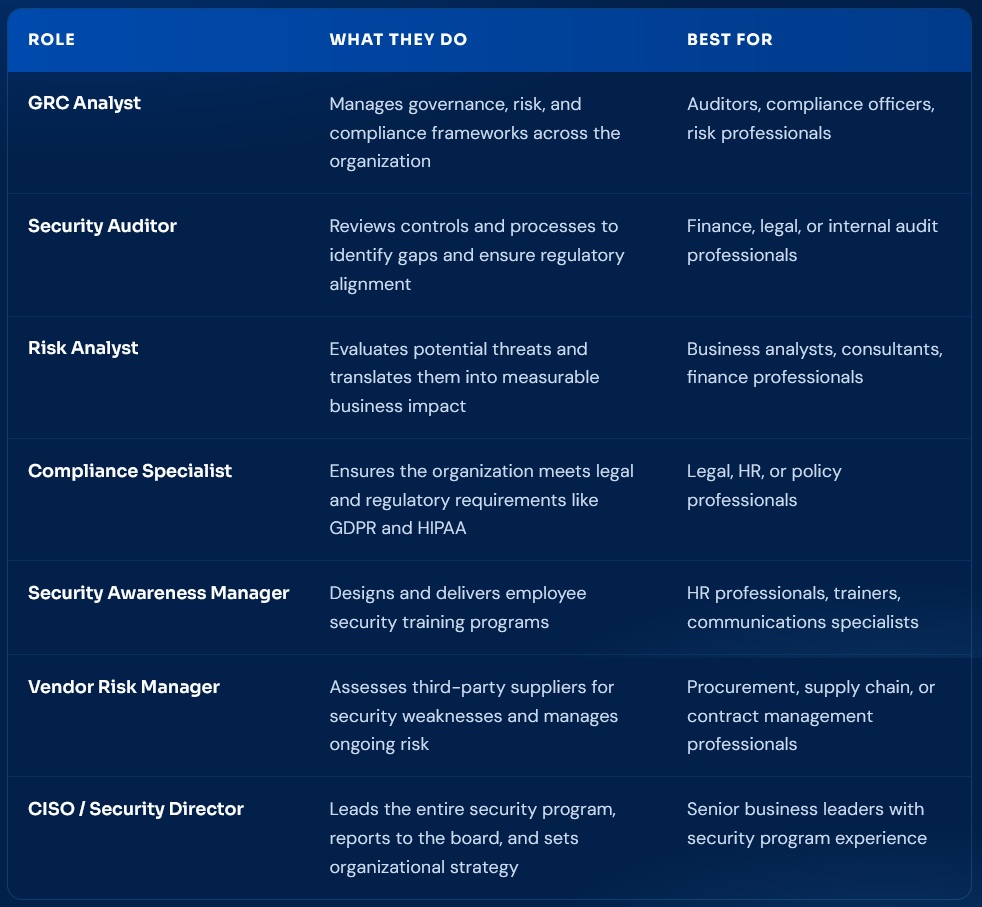
This is where most career guides fall short. Non-technical roles in cybersecurity make up a significant and fast-growing portion of the workforce. These positions focus on governance, risk, compliance, communication, policy, and strategy rather than hands-on technical work, and they are increasingly sitting at executive and boardroom levels.

Non-Technical Roles in Cybersecurity

Key skills required: Analytical thinking, written communication, knowledge of frameworks like NIST, ISO 27001, and COBIT, stakeholder management, and regulatory literacy.

Recommended certifications: CISA, CRISC, CISM, ISO 27001 Lead Auditor, CompTIA Security+

“A GRC analyst career requires no coding whatsoever. The skills you have spent years building in law, finance, or audit are exactly what security teams are actively searching for.”

A GRC analyst career, for instance, demands the ability to read regulatory requirements, map them against existing controls, identify gaps, and communicate findings clearly to both technical teams and business leadership. These are skills that legal, audit, finance, and business professionals have already spent years developing.

Why Cybersecurity Governance Risk Compliance Roles Are Surging

Regulatory pressure is at an all-time high. From GDPR to HIPAA to emerging AI governance frameworks, organizations face a growing and complex web of compliance obligations. Cybersecurity governance risk compliance professionals are the people who help businesses navigate this landscape intelligently, without ignoring regulations or overreacting to every new requirement.

32%

The Bureau of Labor Statistics projects information security roles to grow 32% through 2032, well above the average for all occupations. Within that growth, cybersecurity governance risk compliance positions are among the fastest moving because every organization, regardless of size or industry, now faces regulatory scrutiny.

Professionals entering a GRC analyst career from legal, finance, or audit backgrounds often find the transition faster and more natural than they expected. The frameworks are learnable. The domain knowledge they already carry is genuinely rare and valuable inside security teams.

How Technical and Non-Technical Teams Work Together

It is worth understanding that these two tracks do not operate in isolation. In a mature security program, technical and non-technical professionals collaborate constantly.

Real-World Collaboration Example

A SOC analyst identifies a threat. A risk analyst assesses the business impact. A compliance specialist checks whether the incident triggers a regulatory notification requirement. A security awareness manager updates training materials based on the attack pattern. A GRC analyst documents the event against the organization’s risk register. No single track owns cybersecurity. Both are necessary.

Organizations increasingly value professionals who can speak both languages, even if they sit firmly in one camp. The ability to translate technical findings into business risk language is one of the most sought-after capabilities in the industry today.

Choosing the Right Cybersecurity Career Path for You

Choosing between a technical and non-technical direction comes down to three honest questions. Where do your existing strengths sit? Do you prefer working with systems and tools, or with people, policy, and process? And what kind of problems genuinely hold your attention?

The cybersecurity career path you choose today does not have to be permanent. Many professionals start on one track and migrate toward the other as their careers develop. What matters most is taking the first step with a clear understanding of where your existing skills already give you an advantage.

Cybersecurity careers without coding

The Bottom Line

Cybersecurity careers without coding are legitimate, respected, and urgently needed. The field has room for legal minds, business strategists, auditors, communicators, and risk thinkers just as much as it needs engineers and analysts. The four million unfilled roles worldwide are not waiting exclusively for people who can code. Many of them are waiting for professionals exactly like you.

Understanding non-technical roles in cybersecurity is the first step toward recognizing that the right cybersecurity career path may already align closely with the skills and experience you have spent years building.

The question was never whether you belong in cybersecurity. The question is which door you walk through, and now you know where to find them.

Accelerate Your Cybersecurity GRC Career With Cyveer

Knowing which path fits you is one thing. Having the right resources to actually get there is another. That gap between intention and action is exactly what Cyveer was built to close.

Whether you are a student exploring your first cybersecurity career path, a business professional transitioning into non-technical roles in cybersecurity, a consultant building client-ready deliverables, or a security professional preparing for your next certification or role, Cyveer has practical, ready-to-use resources designed around real-world needs.

Here is what you get access to:

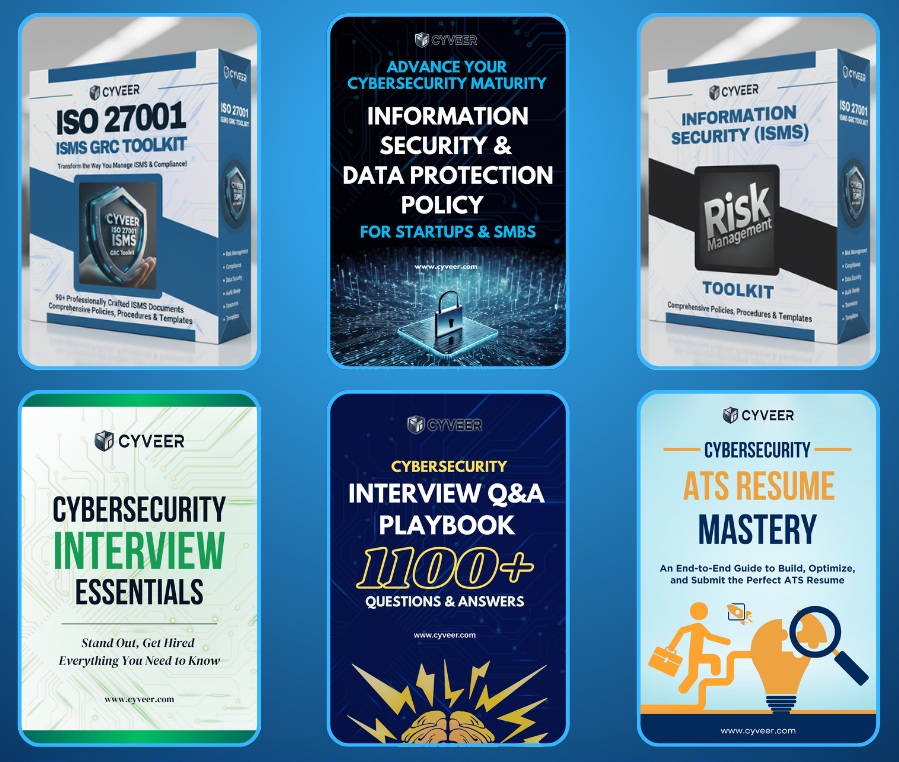
  • ISO 27001 ISMS GRC Toolkit: Professionally crafted policies, procedures, and templates that help you implement and manage information security programs with confidence. Ideal for anyone building a GRC analyst career or working toward ISO certification.
  • Information Security and Data Protection Policy Template: Ready-made policy framework tailored for startups and SMBs, saving you hours of documentation work.
  • Cybersecurity Interview Essentials and  Interview Q&A (1100+) Playbook: Over 1,100 interview questions and answers covering both technical and non-technical cybersecurity domains. Whether you are preparing for a GRC analyst role or a compliance position, this playbook puts you ahead of the competition.
  • ATS Resume Mastery Guide: A complete end-to-end guide to building, optimizing, and submitting a resume that clears applicant tracking systems and lands in front of hiring managers. Built specifically for cybersecurity professionals.

These resources are not generic templates pulled together overnight. They reflect the actual tools, frameworks, and knowledge that cybersecurity governance risk compliance professionals use daily in the field. Using them does not just save time, it builds the kind of practical confidence that comes from working with real-world material.

For anyone serious about building a cybersecurity career path in GRC, compliance, risk, or security management, these resources remove the guesswork and give you a faster, cleaner route from where you are today to where you want to be.

Visit www.cyveer.com or www.cyveer.etsy.com to explore the full resource library. An exclusive offer is currently live, so it is worth checking before the deal ends.

Invest in your growth. Lead in the industry.

Launch Your Career in Months, Not Years

Our Bestselling & Free Resources

Related Articles

Scroll to Top