If you think hackers only go after big corporations, think again. In 2026, over 2.6 billion personal records were compromised in just two years (SentinelOne), and nearly 95% of all data breaches trace back to human error (Cobalt). The reality is, most people are one weak password or one careless click away from a serious breach. Learning how to secure your personal devices is no longer optional. It is the single most important digital habit you can build right now.
This is not another generic cybersecurity checklist. This is a real-world action plan built on how attackers actually operate today, and how you stop them before they get close.
Why Your Devices Are Being Targeted Right Now
The threat landscape has shifted dramatically. The average cybercriminal moves fast. Once someone gains access to one of your accounts or devices, the damage spreads within minutes. Phishing alone is involved in over 42% of all global breaches, and today’s AI-generated phishing messages are so convincing they no longer carry the spelling errors or awkward phrasing that once gave them away.
Personal device security is where your defense begins. Not at the corporate firewall level. Not at the government level. It starts with you, your phone, your laptop, and your home network.
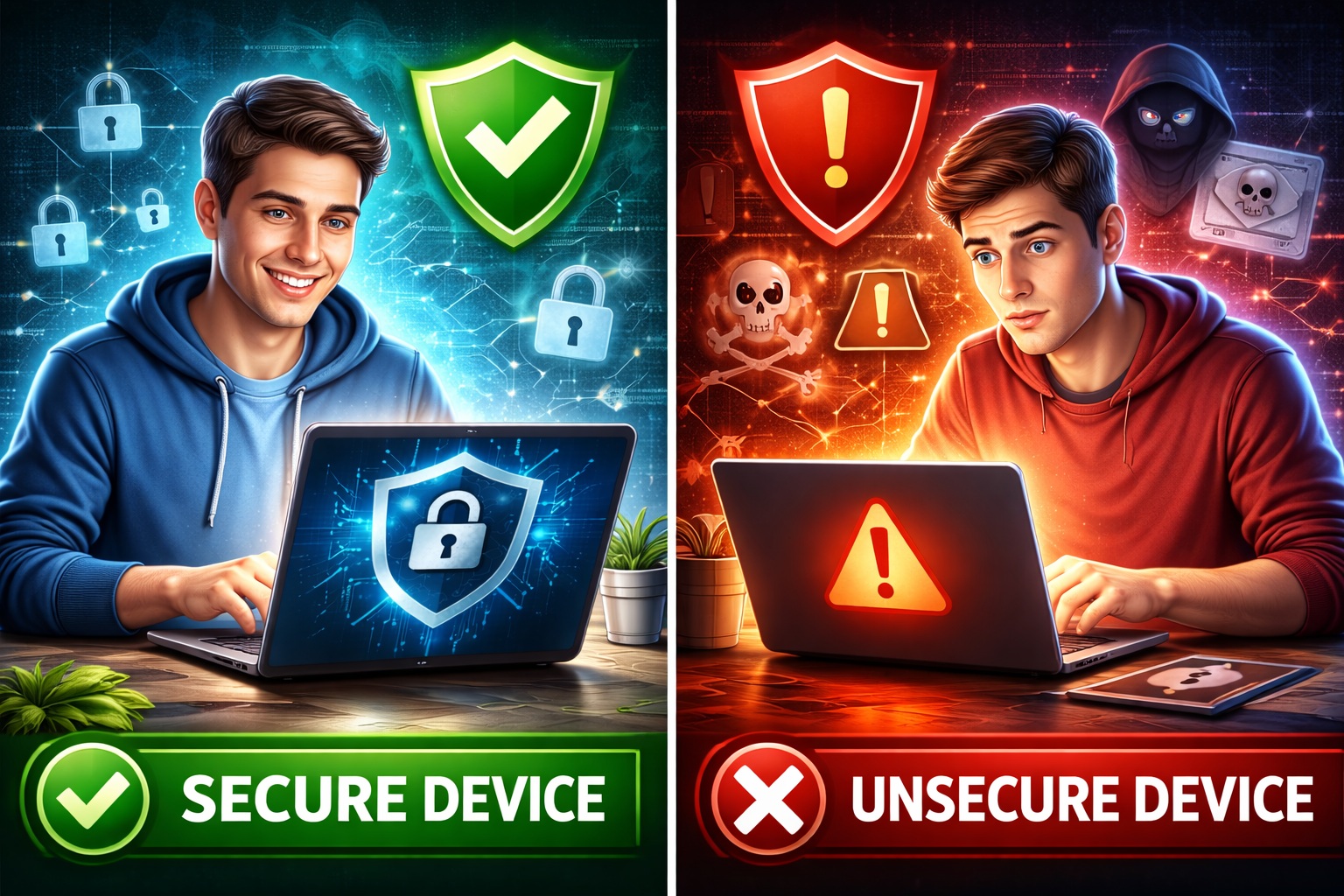
The 7 Steps That Eliminate 80-90% of Real Threats
1. Use Strong, Unique Passwords for Every Account
Weak or reused passwords remain the number one entry point for attackers. Over 43% of people admit to reusing the same passwords across multiple accounts, and cybercriminals count on exactly that habit. Every account you own needs a long, random, and unique password with no exceptions.
A quality password manager eliminates the headache of remembering dozens of credentials and is one of the smartest tools you can add to your personal device security setup. It generates and stores complex passwords automatically so you only ever need to remember one master password.
2. Turn On Two-Factor Authentication Everywhere
Two-factor authentication is your safety net for the moment a password gets compromised. Even if an attacker steals your login credentials, they cannot access your account without that second verification step. Enable two-factor authentication on your email, banking apps, social media accounts, and cloud storage right now, not later.
This one step alone can stop the majority of unauthorized access attempts cold. There are several methods available for two-factor authentication, from SMS codes to authenticator apps to physical security keys, so you can choose the approach that fits your lifestyle.
3. Keep Software and Operating Systems Updated
Outdated software is an open invitation. Attackers actively scan for devices running unpatched systems because the vulnerabilities are publicly known and easy to exploit. Enable automatic updates on every device you own. This single habit closes security holes before cybercriminals ever get the chance to walk through them.
Cybersecurity awareness begins with understanding that those update notifications are not nuisances. They are patches plugging real holes that real attackers are probing every single day. Prioritize updates for your operating system, browser, and any apps that handle sensitive data first.
4. Install Reputable Security Software
Trusted antivirus and endpoint protection software adds a critical detection layer between you and malware. A solid security suite such as Bitdefender Total Security or Norton 360 identifies and neutralizes threats before they reach your files, your photos, or your financial data. Look for solutions that offer real-time scanning, phishing protection, and automatic threat response.
These tools actively work to protect your data online around the clock without requiring you to monitor anything manually. Stick to well-reviewed, regularly updated solutions and avoid anything that promises miraculous protection for free with no reputation behind it.
5. Stop Trusting Links and Downloads Without Verifying
Phishing is not always obvious anymore. A message that appears to come from your bank, your employer, or even a close friend can be crafted with the help of AI to bypass your natural instincts entirely. Before clicking any link or downloading any file, pause and verify. Go directly to the official website rather than following a link in an email or a text message.
Building this habit is a core part of genuine cybersecurity awareness. The moment you slow down and question an urgent message, you are already protecting yourself more effectively than the majority of people who fall victim to these attacks each year.
6. Protect Your Internet Connection
Public Wi-Fi networks in cafes, airports, and hotels are a known hunting ground. Attackers intercept unencrypted traffic on open networks and read your data in transit. A VPN encrypts your connection so that even on an open network, your activity cannot be seen or stolen.
A personal VPN like NordVPN or ExpressVPN is affordable, easy to use, and essential for anyone who regularly connects from public locations. It is one of the most practical ways to protect your data online regardless of where you happen to be working or browsing. This habit becomes even more important if you handle any sensitive work communications on personal devices.
7. Lock, Encrypt, and Control Physical Access
Every device you own should have a screen lock enabled, whether a PIN, fingerprint, or face recognition. Beyond that, enable full-disk encryption on your laptops and mobile devices. Reports show attacks on mobile devices surged by 85% in a single year, and a lost or stolen unencrypted device can expose everything stored on it within minutes.
To secure your personal devices fully, treat physical access with the same seriousness as digital access. Your data does not know the difference between a remote attack and someone physically picking up your unlocked phone from a coffee shop table.
Your First Line of Defense Starts With You
Cybersecurity awareness is not about becoming a technical expert overnight. It is about consistently closing the gaps that attackers count on you leaving open. These 7 steps directly address the weaknesses behind the vast majority of real-world breaches, from reused passwords to unencrypted devices and unsecured networks.
When you commit to personal device security, you are not only protecting yourself. You are protecting your family, your finances, and your professional reputation. Start with one step today, build the habit, and within a week you will have fundamentally changed how well your digital life is protected.
The tools and practices that protect your data online are more accessible than ever before. The only question is whether you act before a breach forces your hand.