Understanding ISO 27001 audit failures is crucial for organizations seeking information security certification. Nearly 40% of organizations fail their first certification audit, experiencing costly ISO 27001 compliance issues that could have been prevented. These ISMS audit challenges and ISO 27001 implementation challenges stem from fundamental gaps rather than technical complexities, making structured preparation essential for avoiding ISO 27001 audit failures.
The Top 10 Critical Reasons for ISO 27001 Audit Failures
1. Inadequate Risk Assessment and Treatment
The most common ISO 27001 audit failures involve superficial risk assessments. Organizations treat this as a checkbox exercise rather than the ISMS foundation, lacking comprehensive asset identification and realistic threat modeling. Many organizations simply list generic risks without considering their specific business context, operational environment, or industry-specific threats. Auditors immediately identify when risk assessments contain boilerplate content copied from templates without customization. The disconnect between identified risks and actual business operations becomes evident during interviews when staff cannot explain how specific risks apply to their roles.
Solution: Implement structured risk assessment frameworks with detailed asset inventories, context-specific threat catalogs, vulnerability assessments, and documented treatment decisions aligned with business objectives and regulatory requirements.
2. Incomplete or Inconsistent Documentation
Documentation deficiencies create critical barriers when organizations submit incomplete policy sets or documentation that fails to reflect actual practices. This represents one of the most frequent ISMS audit challenges where documented procedures describe ideal processes while actual operations follow completely different workflows. For instance, an organization might document a formal change management procedure requiring multiple approvals, but in practice, changes are implemented informally via email requests. Auditors conduct interviews and observe operations to verify documentation accuracy, and inconsistencies immediately raise red flags about ISMS maturity.
Solution: Utilize comprehensive documentation templates covering all mandatory policies, procedures, and work instructions that genuinely align with your operational reality, ensuring every documented process reflects actual practice.
3. Weak Statement of Applicability (SoA)
SoAs with vague justifications or missing control mappings fail auditor scrutiny immediately. The SoA serves as your ISMS roadmap, yet organizations frequently submit documents stating controls are “not applicable” without proper justification, or claiming controls are “implemented” without explaining how. Common mistakes include failing to connect SoA controls back to specific risks identified in the risk assessment, providing generic implementation descriptions like “we have antivirus” without details on management and monitoring, or excluding controls that clearly apply to the organization’s environment.
Solution: Develop detailed SoAs with specific, verifiable justifications for each of the 93 Annex A controls, explicitly linking them to your risk assessment outcomes, and providing clear implementation evidence for each applicable control.
4. Insufficient Management Commitment
Organizations fail when leadership treats ISO 27001 as solely an IT initiative rather than requiring enterprise-wide support. This creates significant ISO 27001 implementation challenges where the IT team struggles to implement controls without authority, budget, or cross-departmental cooperation. Auditors verify management commitment by reviewing meeting minutes, budget allocations, and resource assignments. When executives haven’t attended ISMS meetings, haven’t approved adequate budgets, or can’t articulate the ISMS’s strategic importance during interviews, auditors conclude leadership commitment is superficial.
Solution: Secure genuine executive sponsorship through clear business case presentations demonstrating ROI, comprehensive resource requirements, competitive advantages, and strategic security value that resonates with business objectives.

5. Lack of Control Implementation Evidence
Claiming control implementation without supporting evidence guarantees ISO 27001 compliance issues. Organizations often believe stating “we do this” suffices, but auditors require objective evidence. For example, claiming you conduct security awareness training means nothing without attendance records, training materials, completion certificates, and assessment results. Similarly, asserting you perform regular backups requires backup logs, restoration test records, and verification documentation. Auditors don’t accept verbal assurances, they need tangible proof that controls operate consistently as documented.
Solution: Establish systematic evidence collection processes including comprehensive audit trails, system logs, meeting minutes, training attendance records, incident reports, and testing results that definitively prove controls operate as documented throughout the evaluation period.
6. Poor Internal Audit Programs
Superficial internal audits leave gaps undetected before external audits, representing critical ISMS audit challenges. Many organizations conduct internal audits by simply asking department heads “is everything okay?” without actual evidence review, process observation, or technical verification. Effective internal audits should be as rigorous as external audits, identifying non-conformities, testing control effectiveness, and verifying documentation accuracy. When external auditors discover issues that internal audits should have caught, it demonstrates the internal audit program’s inadequacy.
Solution: Implement comprehensive internal audit programs using standardized checklists covering all ISMS clauses, conducting evidence-based reviews, performing technical testing, documenting detailed findings, and tracking corrective actions through completion with verification.
7. Inadequate Staff Training and Awareness
When employees cannot articulate security responsibilities, auditors question your entire security culture. This manifests during audit interviews when staff members can’t explain basic security procedures, don’t understand their role in incident reporting, or demonstrate poor security practices like sharing passwords or leaving sensitive documents unsecured. Training that consists solely of requiring employees to click through a generic online course without comprehension testing or role-specific content fails to create genuine security awareness.
Solution: Deploy structured awareness programs with role-based training addressing specific job functions, regular refresher sessions, practical scenario-based learning, competency assessments verifying understanding, and comprehensive documented participation records demonstrating ongoing engagement.
8. Scope Definition Problems
Defining ISMS scope too broadly overextends resources while too narrow scope fails to protect critical assets, creating major ISO 27001 implementation challenges. Organizations attempting to include every department, location, and system in initial certification spread resources too thin and struggle with implementation consistency. Conversely, defining scope so narrowly that it excludes critical customer-facing systems or key business processes raises questions about certification validity and business value. Unclear scope boundaries create confusion about which assets, processes, and personnel fall under ISMS requirements.
Solution: Carefully define scope boundaries considering business processes, physical locations, technologies, organizational units, and third-party dependencies with clear interface documentation, justified exclusions, and realistic resource alignment.
9. Missing Management Review Evidence
Organizations cannot produce documented management review meetings or strategic decisions at planned intervals. Management reviews aren’t optional check-the-box meetings, they’re mandatory forums where leadership evaluates ISMS performance, addresses resource needs, and makes strategic decisions. When organizations can’t provide meeting minutes showing leadership discussion of audit results, risk assessment updates, policy changes, or resource allocations, it signals that management reviews either don’t occur or lack substance. Auditors expect to see evidence of management actively governing the ISMS, not rubber-stamping IT reports.
Solution: Schedule regular management reviews with formal agendas addressing required topics, documented inputs on ISMS performance metrics and improvement opportunities, recorded strategic decisions with rationale, and tracked action items with assigned responsibilities and completion deadlines.
10. Failure to Demonstrate Continual Improvement
ISO 27001 requires demonstrating ISMS maturation through improvements and corrective actions. Organizations presenting identical documentation, processes, and metrics from six months ago without any enhancements fail this requirement. Continual improvement doesn’t mean perfection, it means showing you’ve identified weaknesses, implemented improvements, measured their effectiveness, and evolved your ISMS based on lessons learned. This includes addressing internal audit findings, responding to incidents with preventive actions, updating controls based on new threats, and enhancing processes based on performance metrics.
Solution: Implement metrics-driven improvement programs tracking relevant KPIs, systematically addressing identified non-conformities with root cause analysis, documenting enhancement initiatives showing measurable improvements, and maintaining improvement logs demonstrating ongoing ISMS evolution aligned with organizational maturity.
Strategic Solutions: Transforming Failure into Certification Success
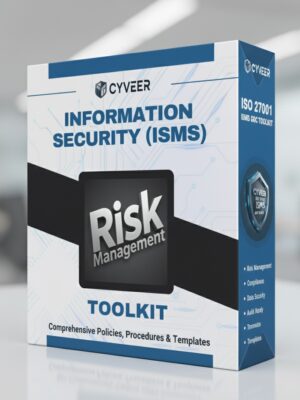
Overcoming these ISO 27001 compliance issues and ISO 27001 implementation challenges requires systematic ISMS implementation strategies eliminating gaps from the start. The ISO 27001 ISMS GRC Toolkit offers complete implementation frameworks specifically addressing these ten causes of ISO 27001 audit failures, providing over 90 expertly crafted templates covering policies, procedures, risk assessments, audit checklists, and compliance documentation.

Organizations attempting manual documentation invest 6-12 months creating policy sets and controls, often still encountering ISMS audit challenges. Comprehensive ISMS implementation strategies through toolkits reduce this timeline to weeks, providing 80-100% complete templates requiring only customization. The toolkit ensures complete coverage of mandatory ISO 27001 clauses and Annex A controls with expert guidance, completion prompts, and alignment mapping that directly addresses common ISO 27001 audit failures.
For organizations struggling with risk assessment, structured ISMS implementation strategies provide proven methodologies auditors recognize. Internal audit effectiveness improves with comprehensive checklists ensuring systematic coverage and professional documentation. Evidence collection becomes systematic through integrated document control procedures, a key differentiator between successful certifications and ISO 27001 audit failures.
Your Path Forward: Investment in Certification Success
Consider the true cost of ISO 27001 audit failures: rescheduling fees, delayed business opportunities, damaged credibility, and extended vulnerability exposure. Compare these substantial costs against ISO 27001 ISMS GRC Toolkit investment delivering complete frameworks and proven ISMS implementation strategies specifically designed to eliminate common ISO 27001 audit failures and ISO 27001 compliance issues.
Your ISO 27001 journey begins with honest capability assessment and systematic implementation commitment. Whether recovering from previous ISMS audit challenges or pursuing first-time certification, structured ISMS implementation strategies provide success foundations. ISO 27001 ISMS GRC Toolkit investment pays dividends through reduced implementation time, lower costs, and sustainable ISMS operations supporting your certification goals while preventing common ISO 27001 implementation challenges through proven ISMS implementation strategies.
Information security certification isn’t merely passing audits, it’s building robust governance protecting valuable assets. With the right tools and commitment, avoiding ISO 27001 audit failures transforms from overwhelming challenge into achievable milestone.