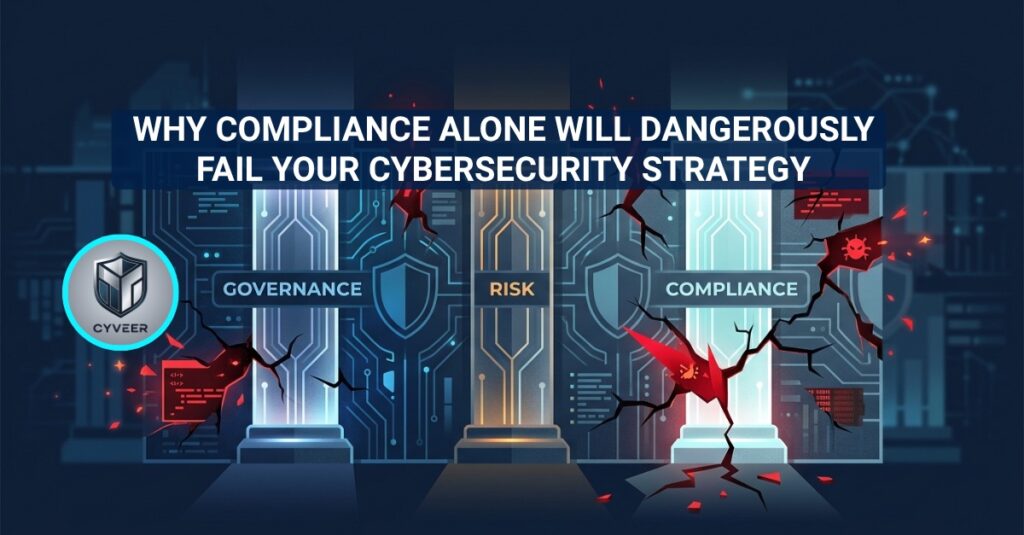
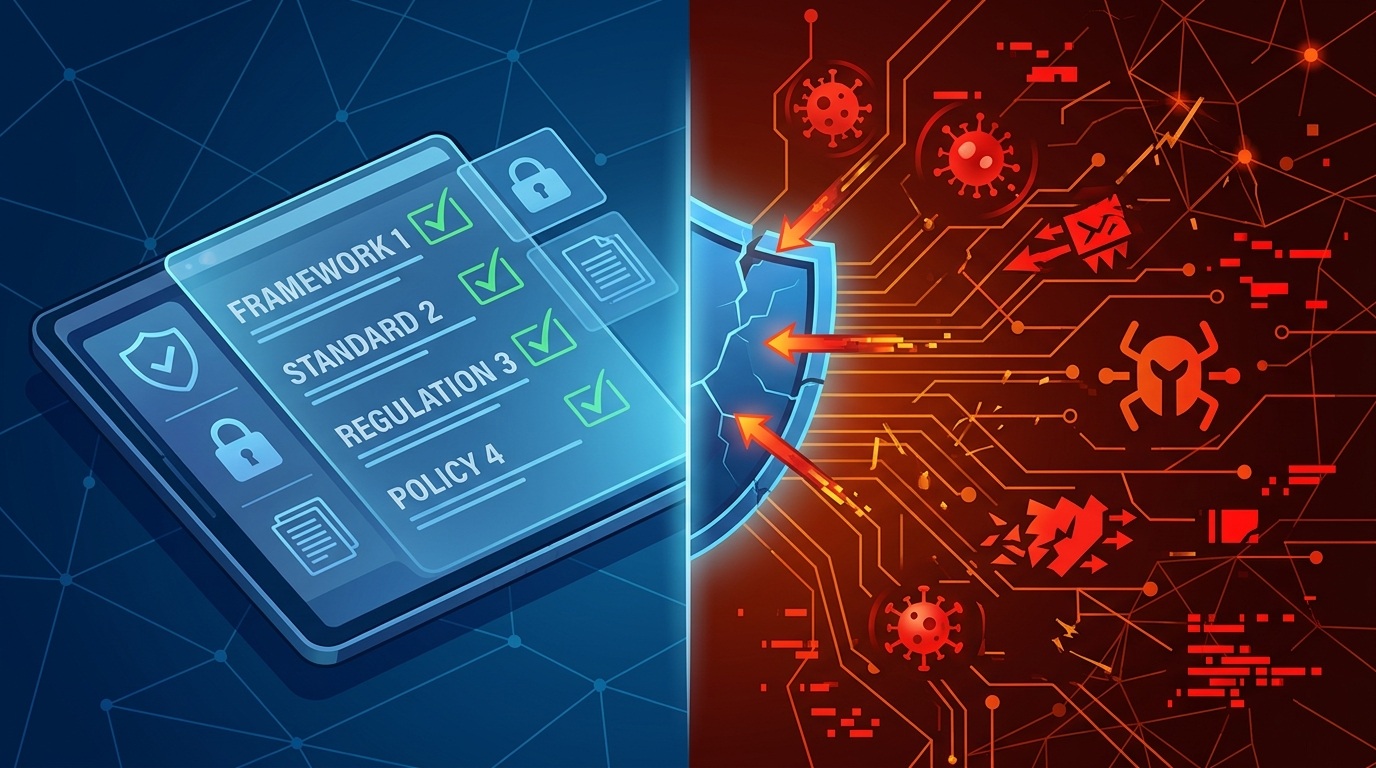
Several of the most catastrophic breaches in recent history happened inside organizations that had passed their audits with flying colors. The checkbox got ticked. The certificate was on the wall. And still, the attacker walked right through an unmonitored access point, a misconfigured cloud resource, or a phishing email that never appeared in the training module.
Where the Compliance vs Security Gap Actually Lives
The friction between compliance vs security shows up in four practical and recurring ways that every CISO, risk officer, and IT leader needs to understand deeply.
1. Minimum Standards Are Not Maximum Protection
An information security framework like ISO 27001 tells you the minimum acceptable level of control. It does not tell you whether those controls are calibrated against your actual threat profile. A small fintech company and a global hospital system may both be “ISO compliant” while facing completely different adversaries using completely different techniques.
2. Audits Are Point-in-Time. Threats Are Not.
Effective cybersecurity risk management is a continuous practice. Audits happen quarterly or annually; adversaries operate daily. The six months between your last audit and your next one represent an enormous window of exposure that compliance alone simply does not close.
3. The Checkbox Culture Kills Real Security
Warning for business and IT leaders: When teams are incentivized to “pass the audit” rather than “reduce actual risk”, controls get implemented on paper and ignored in practice. This checkbox mentality is where the most dangerous security gaps take root inside otherwise well-resourced organizations.
4. Frameworks Cannot Keep Up with Emerging Threats
AI-powered phishing, zero-day vulnerabilities, and supply chain attacks are evolving faster than any standards body can publish updates. Research from MetricStream in 2026 highlights that 87% of cybersecurity professionals now identify AI-related vulnerabilities as the fastest-growing risk category. No static framework addresses that in real time.
What GRC Actually Means When Done Right
Governance risk compliance (GRC) is widely misunderstood as a synonym for compliance work. In reality, it is a far more powerful and integrated discipline. When all three pillars function together, your GRC cybersecurity posture becomes proactive rather than reactive.
| GRC Pillar | What It Actually Does | The Security Impact |
|---|---|---|
| Governance | Establishes leadership accountability, roles, and security-aligned policies | Security decisions get board-level visibility and real budget |
| Risk Management | Identifies, prioritizes, and actively mitigates real-world threats | Resources go where exposure is highest, not where the form says |
| Compliance | Ensures adherence to laws, regulations, and industry standards | Provides a structured baseline and legal defensibility |
The organizations that treat governance risk compliance as an integrated strategy rather than a siloed compliance function, consistently demonstrate stronger breach response, lower incident costs, and greater stakeholder trust. They are not asking “are we following the rules?” They are asking “are we actually protected?” Those are fundamentally different questions with fundamentally different answers.
Moving Beyond Compliance: A Risk-Based Security Strategy
Compliance is not the enemy. It is the foundation. But a foundation is not a building. Here is what genuine GRC cybersecurity maturity looks like in practice, beyond the audit cycle.
Adopt a risk-based security strategy that continuously maps your most likely threat vectors to your most critical assets. Conduct threat-informed testing, not just compliance-driven penetration tests, but adversary-simulated red team exercises. Invest in security awareness training that goes beyond annual modules and builds a genuine security culture across every department. Align your information security framework to real-world intelligence so your controls evolve as threats evolve.
Most importantly, close the gap between governance risk compliance and operational security by ensuring both teams speak the same language. Risk officers and security engineers need shared visibility, and organizational leadership needs to understand that cybersecurity risk management is a business-continuity function, not an IT cost center.