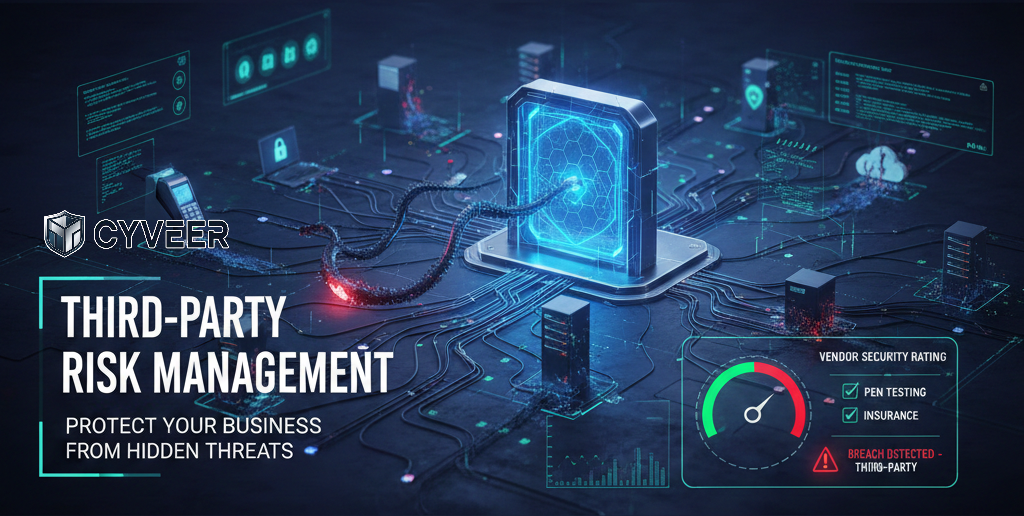
In today’s interconnected business landscape, Third-Party Risk Management has evolved from a compliance checkbox to a critical survival strategy. Every vendor, supplier, and partner with access to your systems represents a potential entry point for cyber threats, and the statistics are alarming. Recent breaches affecting major corporations originated not from internal weaknesses, but through compromised third-party vendors.
The reality is stark: your security is only as strong as your weakest vendor link. When you grant external partners access to sensitive data or critical systems, you’re extending your attack surface beyond your direct control. This is precisely why Third-Party Risk Management demands your immediate attention and strategic investment.
Why Vendor Relationships Create Vulnerability
Organizations typically work with dozens, sometimes hundreds of external vendors. Each relationship introduces unique risks. Your cloud service provider holds your data. Your payment processor handles customer transactions. Your IT support vendor accesses your network infrastructure. A breach at any of these partners can cascade directly into your organization, potentially exposing confidential information, disrupting operations, or triggering regulatory penalties.
The challenge intensifies as supply chain security becomes increasingly complex. Your vendors have their own vendors, creating a multi-tiered risk ecosystem that’s difficult to monitor and nearly impossible to secure without systematic approaches.
The Cost of Inadequate Protection
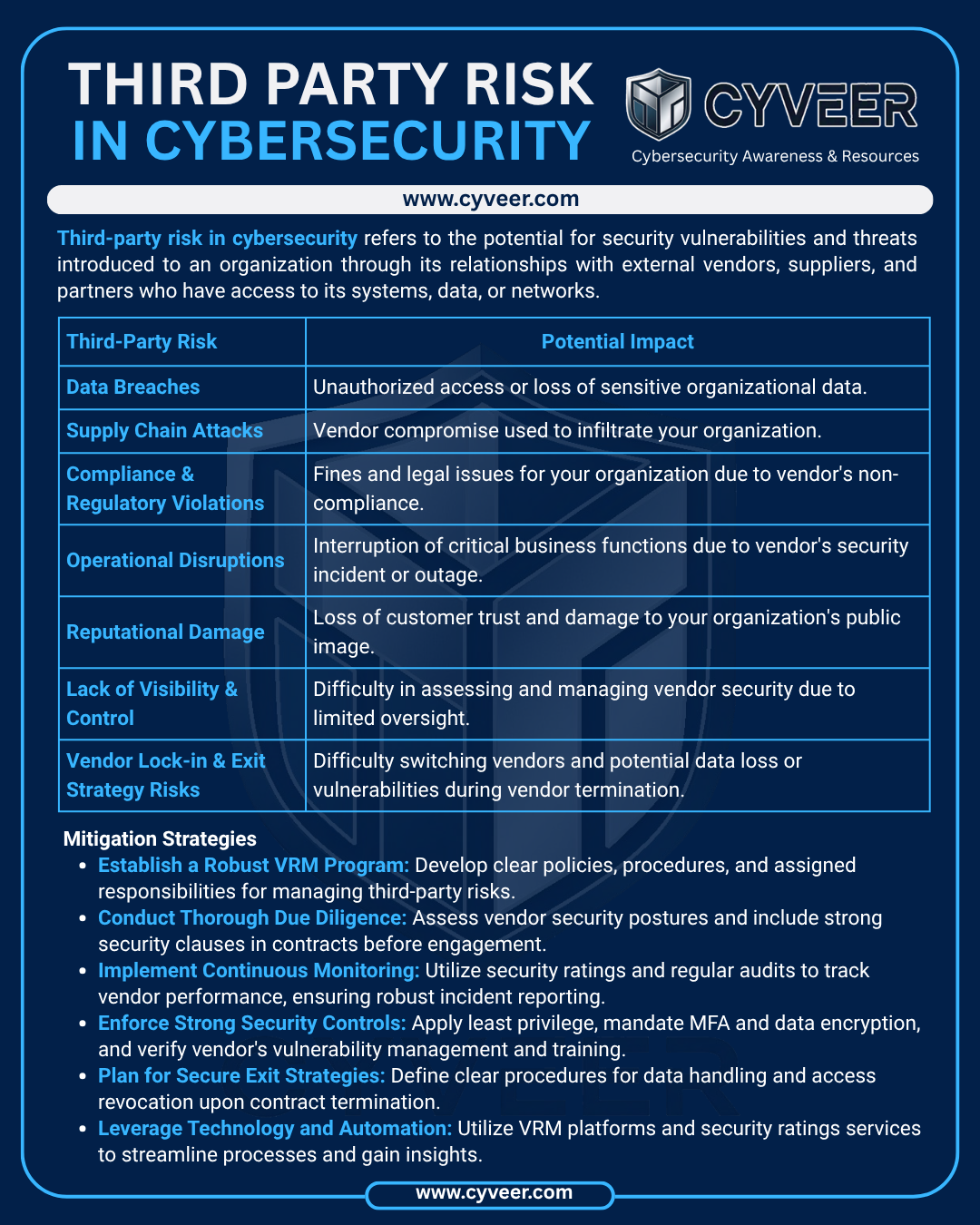
Organizations without structured Third-Party Risk Management face devastating consequences. Data breaches through vendor access points average millions in remediation costs, regulatory fines, and lost business. Beyond financial impact, compromised supply chain security damages customer relationships and erodes market confidence. Recent high-profile incidents demonstrate that attackers specifically target vendors as the path of least resistance. When your vendor risk assessment processes are weak or non-existent, you’re essentially trusting external parties with your organization’s future without verification. This blind trust creates exploitable gaps that sophisticated threat actors actively seek and ruthlessly exploit for maximum impact.
Critical Components of Effective Third-Party Risk Management
Comprehensive Vendor Risk Assessment forms the foundation of your defense strategy. Before onboarding any third party, conduct thorough due diligence examining their security controls, security compliance certifications, incident response capabilities, and financial stability. Don’t accept generic security questionnaires, demand evidence of SOC 2 reports, penetration testing results, and insurance coverage.
Implement continuous monitoring rather than annual reviews. Threats evolve daily, and your third-party security posture must adapt accordingly. Automated tools can track vendor security ratings, monitor for data breaches, and flag compliance violations in real-time, enabling proactive risk mitigation before incidents occur.
Contractual protections provide essential leverage. Your agreements should mandate specific security standards, grant audit rights, define data handling procedures, and establish clear liability for security failures. Include requirements for immediate breach notification and regular security assessments as non-negotiable contract terms.
Building a Resilient Framework
Classify vendors based on risk levels. Those accessing critical systems or sensitive data require intensive scrutiny and ongoing oversight. Lower-risk vendors handling non-sensitive functions need less frequent evaluation but shouldn’t be ignored entirely.
Establish clear cybersecurity compliance expectations aligned with industry frameworks like NIST, ISO 27001, or industry-specific regulations. Require vendors to maintain certifications relevant to their services and your regulatory obligations. Regular compliance verification prevents gaps that attackers exploit.
Create incident response protocols specifically for third-party breaches. Define communication channels, escalation procedures, and remediation responsibilities. When vendor incidents occur—and they will—coordinated response minimizes damage and accelerates recovery.
Transforming Risk into Competitive Advantage
Organizations implementing robust Third-Party Risk Management programs don’t just reduce vulnerabilities, they build customer trust, satisfy regulatory requirements more efficiently, and make faster vendor decisions with confidence. Your risk management maturity becomes a differentiator when competing for security-conscious clients.
The investment in systematic third-party risk management delivers measurable returns: reduced breach probability, lower cyber insurance premiums, streamlined compliance audits, and stronger negotiating positions with vendors. More importantly, it protects your reputation, an asset that takes years to build but moments to destroy.
The question isn’t whether you can afford comprehensive Third-Party Risk Management—it’s whether you can afford the consequences of neglecting it. Start by inventorying your current vendor relationships, assessing their access levels, and implementing tiered oversight based on risk. Your security perimeter extends far beyond your firewall, and protecting it requires vigilance across every vendor relationship.