

In today’s interconnected digital landscape, cybercriminals are constantly evolving their tactics to breach security defenses. Among the most insidious threats facing organizations and individuals is the session hijacking attack, a sophisticated exploitation technique that allows unauthorized access without triggering traditional authentication mechanisms.
Understanding the Session Hijacking Threat
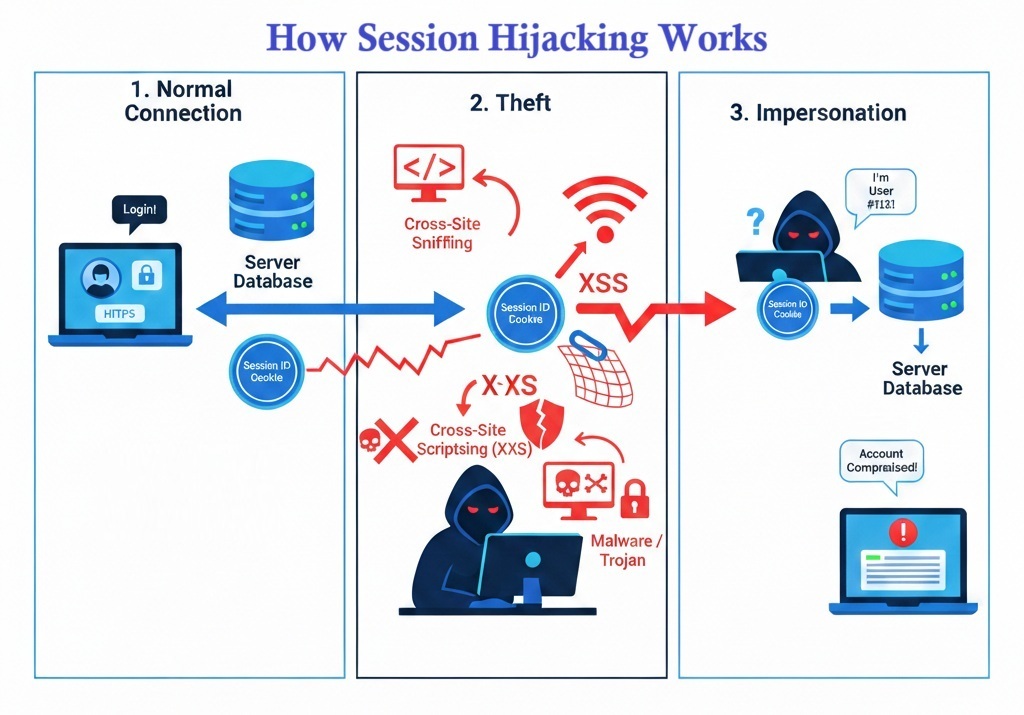
A session hijacking attack occurs when cybercriminals intercept and steal an active user’s session ID, effectively commandeering their authenticated web session. Unlike brute-force password attacks, this method bypasses login credentials and two-factor authentication entirely because the server already recognizes the stolen session ID as legitimate.
The severity of session hijacking attack scenarios cannot be overstated. Once attackers gain control through session ID theft, they inherit all privileges of the authenticated user—accessing sensitive data, executing unauthorized transactions, and potentially compromising entire systems. This makes session security a critical priority for every organization handling confidential information.
How Session Hijacking Methods Operate
Understanding the mechanics behind session hijacking attack techniques is essential for building effective defenses. The attack exploits the trust relationship between web browsers and servers through three primary vectors:
Packet Sniffing for Session ID Theft: Cybercriminals monitor unencrypted network traffic, particularly on public Wi-Fi networks, to capture session cookies transmitted between browsers and servers. This form of cookie hijacking happens silently in the background while victims browse normally.
Cross-Site Scripting (XSS) Exploitation: Attackers inject malicious JavaScript code into vulnerable websites that extracts session cookies directly from users’ browsers. This sophisticated session hijacking attack method leverages website vulnerabilities to facilitate session ID theft without user awareness.
Session Fixation Manipulation: In this preemptive session hijacking attack variant, criminals trick users into authenticating with a predetermined session ID that the attacker already controls, ensuring immediate access once login completes.
Implementing Comprehensive Web Session Protection
Defending against session hijacking threats requires a multi-layered security approach combining user vigilance with robust technical controls.
User-Side Session Security Practices
Deploy VPN Technology: Virtual Private Networks (VPN) encrypt all network traffic, creating a secure tunnel that prevents session ID theft through packet sniffing. This is particularly crucial when accessing business applications over public networks where cookie hijacking risks are elevated. Just as RFID skimming protection safeguards your physical payment cards and credentials, VPNs protect your digital session data from wireless interception on public networks.
Practice Proper Session Termination: Always use official logout functions rather than simply closing browser tabs. Proper logout procedures invalidate session IDs server-side, eliminating the primary target of any session hijacking attack.
Maintain Browser Hygiene: Regular cookie clearing removes orphaned session data that could become vectors for session hijacking attack exploitation. Implement scheduled browser maintenance as part of your session security routine.
Verify HTTPS Encryption: Before transmitting sensitive information, confirm the presence of HTTPS protocol indicators. This ensures web session protection through encrypted communications that resist session ID theft attempts. Understanding SSL/TLS encryption is fundamental to recognizing secure connections.
Adopt Layered Security Mindset: Session security is just one component of comprehensive digital protection. Combine these practices with physical security measures like webcam covers to defend against multifaceted threats targeting both your digital sessions and personal privacy.

Developer-Implemented Session Security Controls
Configure Secure Cookie Attributes: Implementing HttpOnly and Secure flags prevents JavaScript-based cookie hijacking while ensuring session cookies transmit exclusively over encrypted channels, significantly reducing session hijacking attack surface area. Following OWASP’s session management guidelines ensures compliance with industry-standard security practices.
Deploy Session Regeneration: Issuing fresh session IDs immediately post-authentication invalidates any pre-compromised identifiers, neutralizing session fixation variants of session hijacking attack methodologies.
Establish Session Timeout Policies: Automated session expiration after inactivity periods limits the window of opportunity for successful session hijacking attack execution, enhancing overall web session protection.
Enforce HTTP Strict Transport Security (HSTS): HSTS headers force browsers to communicate exclusively via HTTPS, eliminating protocol downgrade attacks that facilitate session ID theft and strengthening session security infrastructure.
Taking Action Against Session Hijacking Threats
The session hijacking landscape continues evolving as cybercriminals develop increasingly sophisticated session ID theft techniques. Organizations and individuals must adopt proactive session security postures rather than reactive responses.
Begin by conducting comprehensive security audits focused on web session protection mechanisms as part of your broader cybersecurity risk management strategy. Implement the technical controls outlined above while establishing user education programs emphasizing session security best practices. Remember that effective defense against session hijacking attack threats requires ongoing vigilance, regular security assessments, and continuous adaptation to emerging cookie hijacking methodologies.
Your digital identity deserves robust protection. Don’t wait for a session hijacking attack to expose vulnerabilities, implement these essential session security strategies today and fortify your defenses against evolving cyber threats.