
If you have never taken the time to check your digital footprint, you are essentially leaving your front door unlocked and hoping nobody walks by. Most people assume hackers need sophisticated malware or brute-force tools to target them. The reality is far simpler and far more unsettling: attackers often just look.
Every time you post a photo, sign up for a newsletter, or leave a review online, you are adding another layer to your digital footprint. Most people never stop to think about how much of their life is quietly visible to strangers. That is exactly where attackers begin.
Long before a hacker sends a phishing email or attempts a password reset, they build a profile of you using nothing but publicly available information. Understanding how to check your digital footprint is no longer optional; it is the foundation of genuine cybersecurity awareness for anyone who lives, works, or does business online.
A personal OSINT audit, the same technique intelligence analysts and penetration testers use, can reveal how attackers profile you online using nothing but information you have already made public.
Why Your Digital Footprint Matters More Than You Think
Your digital footprint is the trail of data you leave behind: old social media posts, forum comments, professional bios, leaked credentials, even metadata hidden inside the photos you share. Every fragment of your online presence adds up.
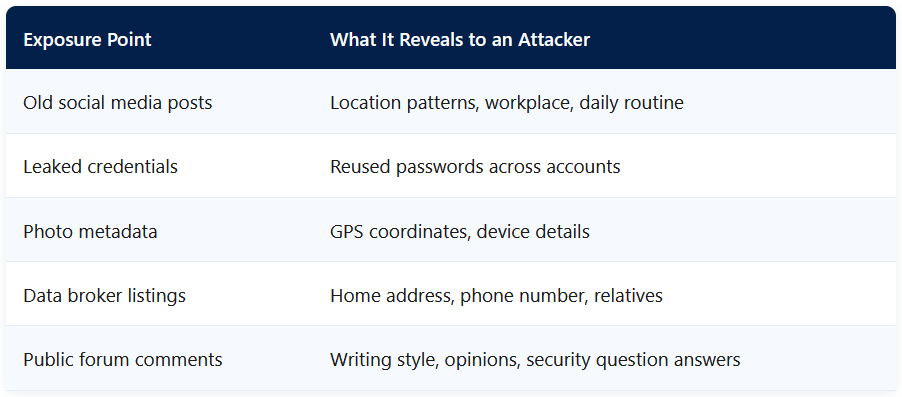
Attackers rarely need one dramatic breach; they need several small ones stitched together. Attackers use a discipline called Open Source Intelligence, or OSINT, to piece these fragments together. They do not need to hack anything to do it. A determined attacker can combine your job title, your pet’s name from an old Instagram caption, and your city from a check-in post to guess your security questions or craft a convincing spear-phishing message. This is why cybersecurity awareness training increasingly starts with a simple exercise: look at yourself the way an attacker would.

How Attackers Profile You Online
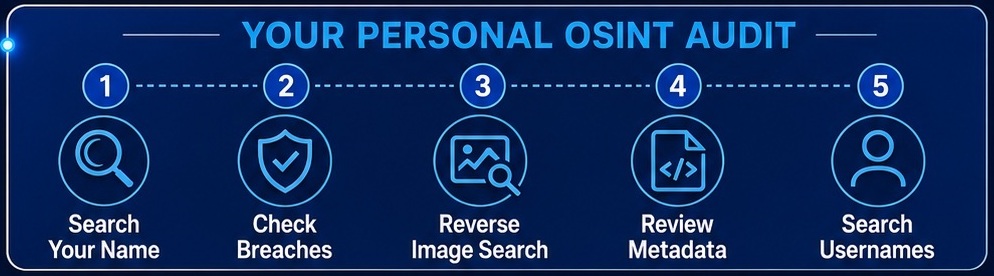
Here is the exact process worth trying on yourself this week. Set aside twenty minutes and follow along.
- Search your full name in quotation marks, then narrow it with your employer or city. Note anything you did not expect to appear.
- Run your email through a breach-checking service such as “Have I Been Pwned” to see if it appears in a known data breach.This single step is often the fastest way to check your digital footprint for compromised passwords.
- Reverse image search your profile photo. See where else it has been used or reposted.
- Pull metadata from a recent photo using a free metadata viewer. Many phones still embed location data by default.
- Search your username across platforms to find forgotten or dormant accounts.
Professional analysts use more advanced OSINT tools for deeper reconnaissance, but even these entry-level checks are usually enough to reveal an uncomfortable amount of exposure.

As you work through this process, keep notes. Write down every account, every leaked password, and every piece of personal information a stranger could find in fifteen minutes. This list becomes your roadmap for cleanup, and it is often the moment where cybersecurity awareness stops being abstract and starts feeling personal.
Where Most Exposure Actually Comes From
A single data breach rarely causes serious harm on its own. The real danger comes from correlation. Attackers combine data breach records with social media details and data broker listings to build a complete picture. Data broker sites, in particular, quietly collect your address, phone number, relatives, and even income estimates, then sell that information to anyone willing to pay. If you have never opted out of these sites, check your digital footprint that is almost certainly larger than you assume.
Turning Findings Into a Digital Footprint Cleanup Plan
Discovery without action changes nothing. Once your audit is complete, move directly into cleanup:
- Change any password tied to a confirmed breach and enable multi-factor authentication.
- Delete or deactivate accounts you no longer use.
- Submit removal requests to major data broker sites.
- Strip metadata from images before posting publicly.
- Tighten privacy settings on every active platform.
A proper digital footprint cleanup is not a one-time fix. New accounts, new posts, and new breaches constantly add to your exposure, so repeating this personal OSINT audit every few months keeps your results current rather than outdated.
The professionals who stay safest online share one trait: they routinely check their digital footprint instead of assuming they are invisible.
Make It a Habit, Not a One-Time Task
What makes this approach powerful is that it puts you in the attacker’s seat before they ever get the chance. By running your own reconnaissance with accessible OSINT tools, you convert vague anxiety about privacy into a concrete, actionable checklist. This is the essence of modern cybersecurity awareness: not fear, but informed action.
Your information is already circulating somewhere. The only real choice left is whether you find it and clean it up first, or wait for someone with worse intentions to find it for you.