Why the Old Audit Model Is Failing Everyone
Traditional audits often show up unannounced, dig through systems like detectives hunting for a culprit, and leave a trail of defensive employees in their wake. This adversarial style might satisfy a compliance checkbox, but it rarely improves security posture in any lasting way. People stop being honest. They hide gaps instead of reporting them. And that defeats the entire purpose.
A well executed information security internal audit flips this dynamic. Instead of hunting for someone to blame, it becomes a collaborative effort to strengthen the organization’s actual defenses. This shift in mindset is the single biggest factor separating audits that create real change from audits that just generate paperwork.
Rethinking the Security Audit Process
The security audit process should never start with surprise inspections. It starts with communication. Before a single system is reviewed, the audit team should sit down with stakeholders, explain the scope, and clarify that the goal is improvement, not punishment.

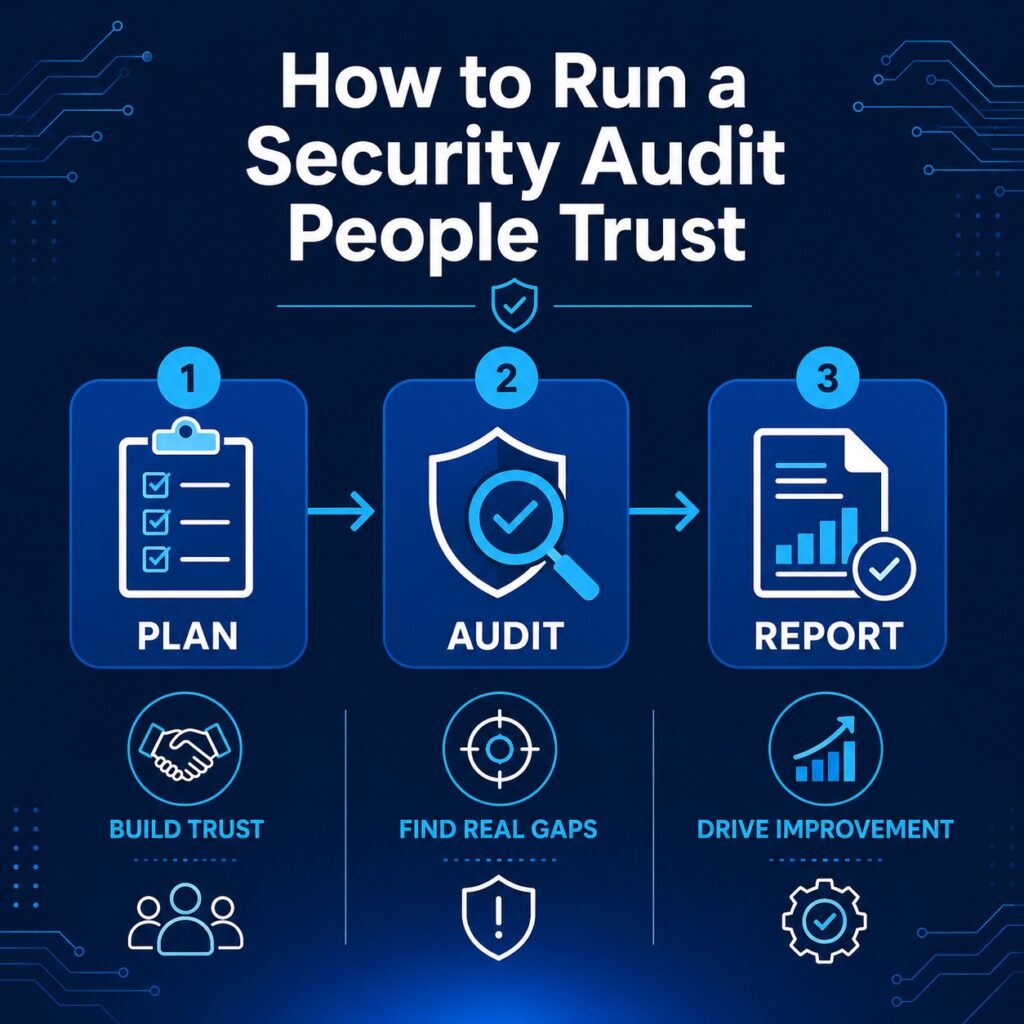
A mature security audit process moves through three deliberate phases. Planning defines scope, risk areas, and realistic timelines. Fieldwork tests real controls against real evidence, not just checklist boxes. Reporting translates raw findings into language business leaders can act on immediately. When each phase runs with transparency, the security audit process stops feeling like a threat and starts feeling like a diagnostic partner.
Internal Controls Audit Without the Fear Factor
An effective internal controls audit works best when it focuses on systems and processes, never individuals. Frame every finding around the control gap, not the person who happened to be sitting at that desk when the gap was discovered.
Instead of writing “the administrator failed to disable a former employee’s access,” a stronger internal controls audit entry reads “the offboarding workflow lacks an automated trigger to revoke access within 24 hours.” That single reframe changes everything. It removes blame and points straight at a fixable process, which is the only outcome that actually reduces risk.
Cybersecurity Internal Audit in Today’s Threat Landscape
We are living through an era where ransomware, phishing, and supply chain attacks evolve faster than most security teams can patch against them. A cybersecurity internal audit today has to account for cloud misconfigurations, remote work vulnerabilities, and third party risk, issues that barely existed a decade ago.
This is exactly why a cybersecurity internal audit can no longer sit as a once a year formality on a compliance calendar. It needs to be woven into daily operating culture, treated as an ongoing conversation about risk instead of a dreaded annual event. Organizations that adopt this rhythm consistently recover faster when a real incident hits.
The Underrated Power of Internal Audit Report Writing
Even a flawless information security internal audit can stumble at the finish line if findings are poorly communicated. Internal audit report writing is where technical discoveries get translated into decisions leadership will actually understand and fund.
Strong internal audit report writing avoids jargon, ranks findings by genuine business risk, and always pairs a problem with a realistic fix. Skip the habits that fill pages nobody reads past the second one. Clarity wins over volume, every single time.