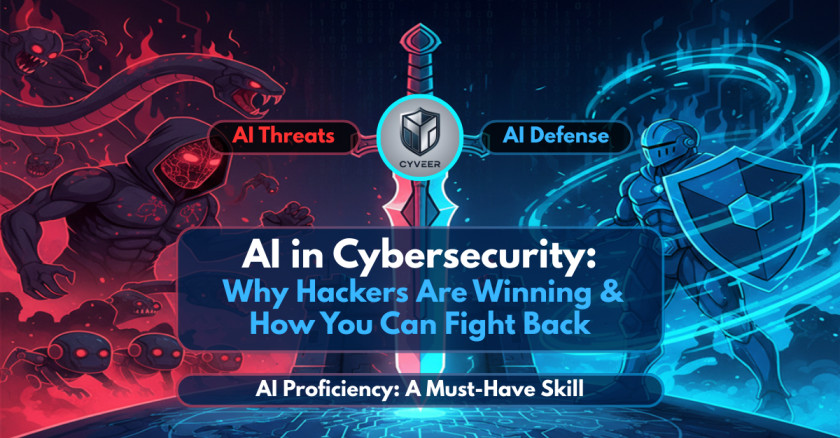
The cybersecurity landscape is experiencing an unprecedented transformation. AI in cybersecurity has evolved from an experimental concept to the defining factor that separates vulnerable organizations from protected ones. This isn’t merely a technological upgrade, it’s a fundamental shift in how cyber threats emerge and how we defend against them.
The AI-Powered Threat Evolution
Cybercriminals have discovered that AI in cybersecurity works both ways. Attackers now leverage artificial intelligence to launch sophisticated campaigns that traditional security measures simply cannot detect or prevent.
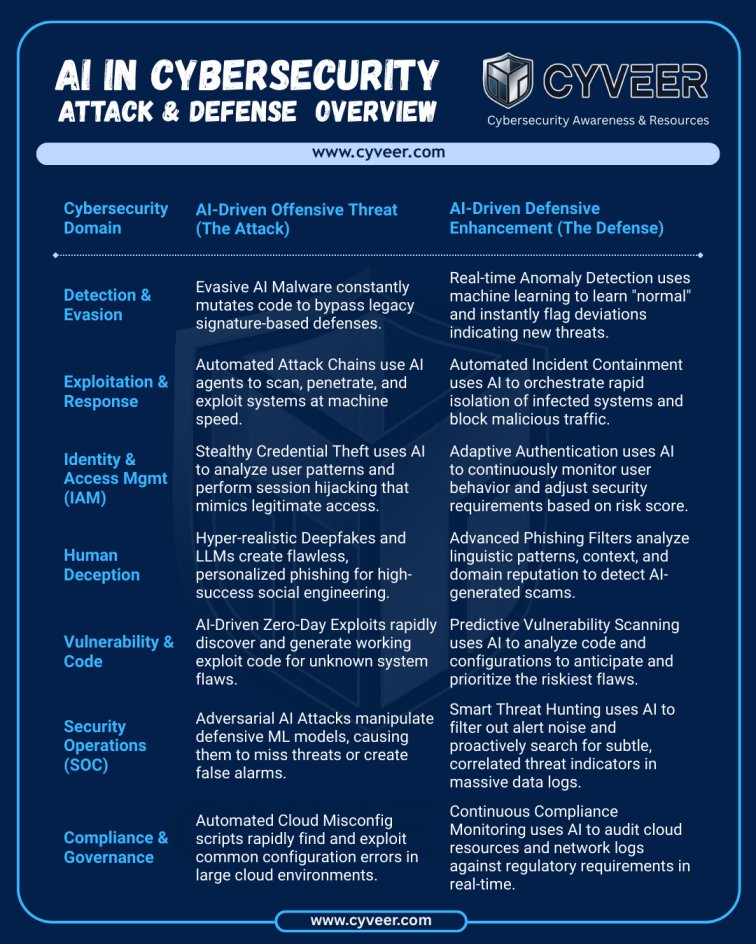
Modern AI-driven cyber attacks have become terrifyingly sophisticated. AI-powered polymorphic malware continuously rewrites its own code, creating unique signatures that evade conventional antivirus detection. Generative AI creates flawlessly written, personalized phishing emails that mimic your colleague’s writing style or your bank’s communication patterns. Deepfake technology produces convincing audio and video content, turning social engineering into an almost undetectable threat.
Automated attack chains now operate at machine speed. AI agents conduct reconnaissance, identify vulnerabilities, and execute exploits faster than human security teams can respond. Perhaps most concerning is adversarial AI, attackers are learning to poison defensive AI models or craft inputs that trick security systems into classifying threats as harmless.
The Defensive Revolution
Fortunately, AI cybersecurity solutions provide defenders with equally powerful capabilities. Organizations implementing AI-powered security are detecting threats that would otherwise remain invisible until catastrophic damage occurs.
Real-time threat detection powered by machine learning excels at identifying anomalies. These systems establish behavioral baselines for network traffic and user activity, instantly flagging deviations that indicate compromise. Unlike signature-based detection, AI for threat detection identifies threats it has never encountered before, including zero-day exploits and novel attack vectors.
Automated incident response dramatically reduces breach impact. When AI detects a threat, it immediately orchestrates containment, isolating infected systems, blocking malicious traffic, and preventing lateral movement. What previously took security teams hours now happens in minutes, often stopping attacks before significant damage occurs.
Implementing AI cybersecurity solutions also supports regulatory compliance frameworks. Organizations maintaining ISO 27001 ISMS compliance can leverage AI-powered monitoring to ensure continuous compliance with information security management standards, automating evidence collection and risk assessments that previously required manual intervention.
Advanced AI-powered security systems analyze linguistic patterns, emotional manipulation techniques, and contextual anomalies to identify even the most sophisticated AI-generated social engineering attempts. These systems adapt continuously, learning from each new attack variant they encounter.
The Critical Skills Gap
The integration of AI in cybersecurity has created an urgent skills shortage. Organizations worldwide struggle to find security professionals who understand both cybersecurity fundamentals and artificial intelligence applications. Traditional cybersecurity training no longer suffices in this AI-driven landscape.
Modern security professionals must understand how to deploy, configure, and manage AI-powered security platforms including SIEM, SOAR, and EDR solutions. They need to interpret AI-generated insights, validate automated responses, and provide the critical human judgment that AI cannot replicate.
Bridging the Gap with Specialized Training
Addressing this challenge requires specialized education that bridges cybersecurity and artificial intelligence. The AIOps diploma offered by Alnafi International College provides exactly this critical combination, preparing security professionals for the AI-integrated battlefield.
This comprehensive program covers both defensive and offensive AI applications in cybersecurity. Students learn to deploy AI cybersecurity solutions, understand machine learning algorithms used in threat detection, and develop strategies to counter AI-driven cyber attacks. The curriculum includes hands-on experience with real-world tools, ensuring graduates can immediately apply their knowledge in production environments.

Key benefits include practical training in automated incident response, AI-driven vulnerability management, and adaptive authentication systems. The program also addresses the business dimension, helping professionals communicate AI security strategies to non-technical stakeholders and justify investments through data-driven risk assessments.
The Imperative for Action
AI in cybersecurity has transitioned from optional enhancement to absolute necessity. Organizations without AI-powered defenses face attackers who have no such limitations. For cybersecurity professionals, AI literacy is no longer a specialization, it’s a foundational requirement.
The automation of routine tasks through AI frees security teams to focus on strategic thinking, complex problem-solving, and the irreplaceable human judgment that differentiates competent security from truly effective defense. The digital battlefield has evolved, and those who master the intersection of artificial intelligence and cybersecurity will protect our increasingly connected world. The time to act is now.